
11:00 am to 19:30 pm

Authentic Portuguese Handicrafts

Pottery, Embroidery & Filigree

Coimbra Pottery

Coimbra Pottery
19 March, 2021

Coimbra, in the center of Portugal, has produced ceramics for many centuries and possesses the oldest written document related to national ceramics.
The pottery of Coimbra represents the Eastern tradition - porcelains of China that was brought back by the sailors during the time of the discoveries - and also the influence of the Arab style.
Since 1960 there have also been produced ceramics inspired by the important Roman ruins of Conimbriga that exist nearby.
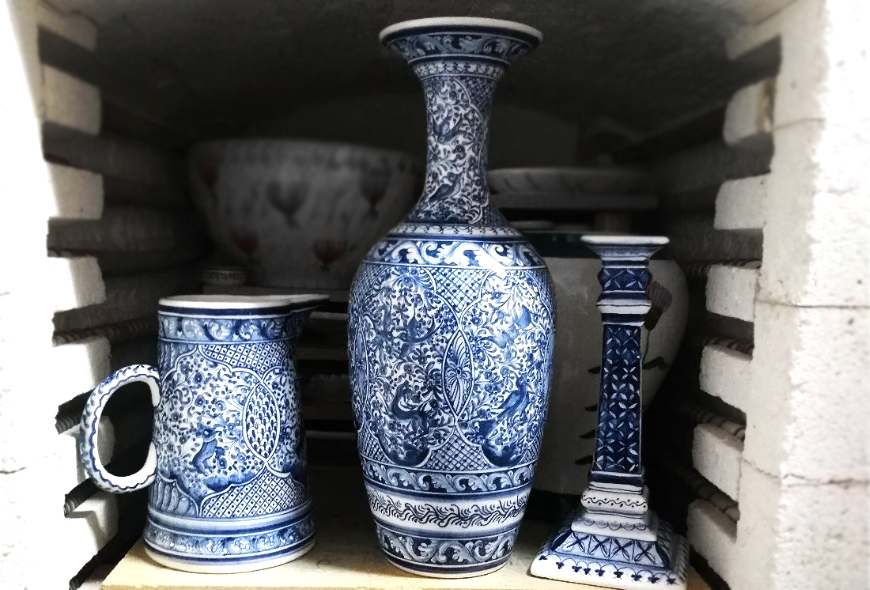
The pieces are decorated and distinguished by the following characteristics: 17th century blue drawings and color drawing (both inspired by the scenes of hunts); 15th century design under Arab influence and 18th century drawing with feathers and plumages of exotic birds that produce a unique effect giving the dishes a unique characteristic that it is impossible to confuse it with any other.


XV

The 15th-century ceramics from Coimbra stand out as one of the richest expressions of Portuguese craftsmanship of the time, reflecting a unique blend of cultural influences, especially Arab. During the Middle Ages, Coimbra was an important center for ceramic production, thanks to its strategic location and rich local traditions. The city already had a heritage of ceramic production dating back to Roman times, but the introduction of Islamic techniques and styles, following the Arab presence in the Iberian Peninsula (711-1249), profoundly shaped the evolution of this craft.

The Arab influence on Coimbra’s ceramics manifested mainly in the use of techniques such as dry-cord decoration and metallic glazing, characteristic of Islamic pottery. Arab potters were masters in creating geometric and floral motifs, often intertwined, as well as the use of vibrant colors like green, blue, and yellow, which began to be incorporated into the pieces produced in Coimbra. The Arab decorative style was rich in symbolism and frequently presented rhythmic repetition of patterns, a feature widely adopted by local artisans.

In the 15th century, Coimbra became a meeting point between Arab heritage and local and Christian traditions. The ceramics of Coimbra from this period display a blend of these styles, with traditional forms like plates, jars, and tiles, adorned with motifs reminiscent of Moorish arabesques and the intense colors of glazed enamels. This pottery was not only decorative but also functional, used in various everyday activities such as storing food and water.

Moreover, Islamic influence was also reflected in the sophistication of production techniques, such as the improvement of the potter's wheel and kilns, allowing the creation of more refined and detailed pieces. Over time, Coimbra's ceramics became a symbol of Portuguese craftsmanship, bearing the deep marks of Arab culture and contributing to the country's artistic identity.

Thus, the 15th-century ceramics of Coimbra are a testament to the coexistence and exchange of cultures in the Iberian Peninsula, especially between the Arab legacy and medieval European tradition, resulting in pieces of great beauty and technical complexity.


XVII

The 17th-century ceramic workshops of Coimbra began producing pieces with patterns that directly evoked the geometric designs and naturalistic themes observed in the Roman mosaics of Conímbriga. These mosaics, which adorned the floors of Roman villas and public buildings, were often decorated with natural elements such as leaves, flowers, animals, and mythological figures. These same themes were reproduced in ceramic pieces, especially plates, tiles, and vases.

The cobalt blue painting technique, characteristic of Coimbra ceramics, found a perfect foundation in these Roman motifs for its compositions. Thus, although cobalt blue was a later influence (Delft culture / Netherlands), the decorative foundation had existed for centuries in the Roman ruins. Many geometric and naturalistic patterns found in Coimbra ceramics have their origins in these mosaics, creating a cultural and aesthetic continuity.

The 17th-century ceramics of Coimbra, by directly drawing inspiration from the ruins of Conímbriga, pay homage to the Roman culture that shaped the identity of the region. The motifs found in the ruins were transformed into decorative patterns, and cobalt blue later helped highlight these designs in pieces that are both functional and decorative.

Roman heritage, therefore, not only influenced but was central to the ceramic production of Coimbra, which continues to carry this rich history in every piece.


XVIII

The royal pheasant is a majestic bird frequently depicted in traditional Coimbra painting, especially on ceramic and tilework pieces. In Coimbra painting, the royal pheasant symbolizes elegance and a celebration of nature, being portrayed with its vibrant colors and detailed plumage.

In many ceramic pieces, the pheasant is depicted with meticulous details, surrounded by floral motifs and natural landscapes. The choice of this bird is not only decorative but also symbolic, representing royalty, beauty, and power. The use of deep blues and rich yellows in the representations of the pheasant highlights the craftsmanship of Coimbra artisans, who capture the essence of natural figures using traditional techniques and the region's characteristic color palette.

This bird can also be found in tile panels, framing rural scenes or serving as the central piece in more elaborate compositions. The presence of the royal pheasant in Coimbra painting reflects not only an appreciation for exotic fauna but also the artistic skill of the region's master ceramists.

So, while the pheasant in Coimbra painting has local symbolic meanings of beauty and power, its depiction is indeed a result of cross-cultural exchange, particularly with Asia, adding another layer of depth to this artistic tradition. Chinese porcelain, known for its intricate designs and representations of natural elements, including birds, greatly influenced Portuguese ceramic traditions.

Add Comment

You must login to add a comment. If you do not have an account, you may register for one. Registration is free!